Mikhail Salita: The Journey to Himself — and the Road to Athens
From the legendary golden cat on King Solomon’s throne to the international revival of one of the world’s rarest domestic cat breeds.
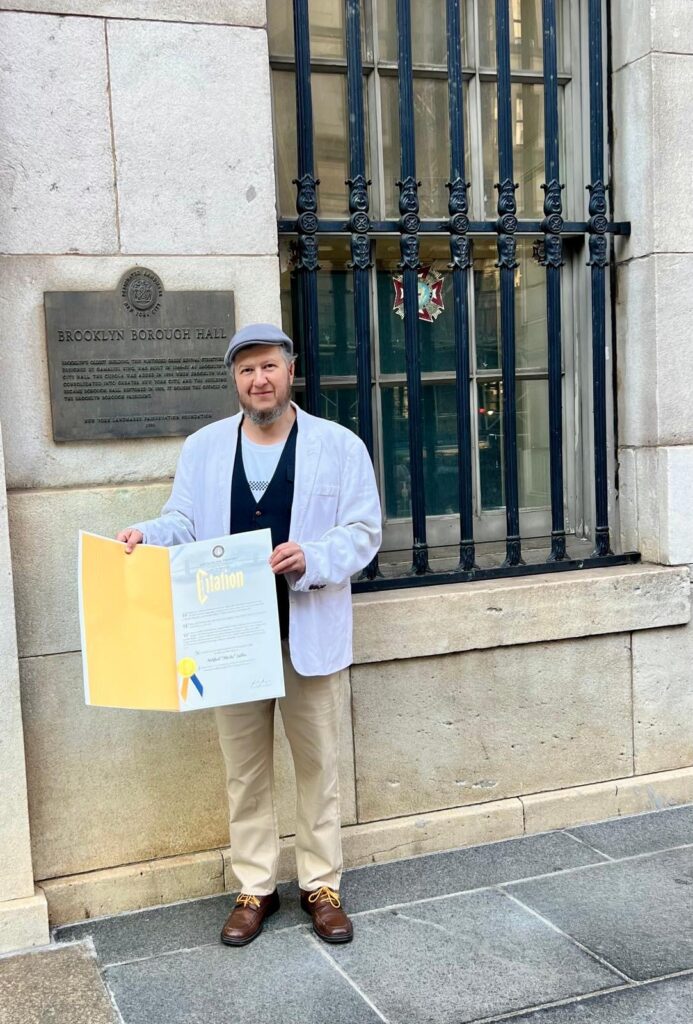
I have known Mikhail Salita for more than a decade. During those years, we have met in person only twice, once in summer and once in autumn, on opposite sides of the Atlantic. But those were hardly brief encounters. When I visited the United States, I spent three weeks living in his home. When Mikhail came to Odesa, we spent another week together.
Nearly a month of close companionship, not counting countless telephone conversations, debates, and discussions of literary projects and ambitious ideas.
We have also collaborated as writers. We worked on a novel about a man from Odesa whose life took an extraordinary and difficult course, and we are currently developing a historical novel about Vladimir (Ze’ev) Jabotinsky, the Odesa-born writer and Zionist thinker.
Over the years, I have come to recognize something unusual about Mikhail’s character. He has never been content simply to settle into a comfortable life.
For many immigrants, the American dream means education, professional achievement, financial security, and the freedom to enjoy the rewards of hard work. Mikhail pursued education and built a professional life in America. Yet even after earning multiple degrees and working in several professions, he continued searching for something beyond personal success.
He was searching for a calling.
Then, one day, he decided to become a rabbi.
And he did.
At first, it seemed that his long spiritual journey had reached its destination. Looking back now, I believe his ordination was not an ending but the beginning of a new chapter.
For nearly a decade, I served as chairman of Odesa’s Progressive Jewish community. During that time, I came to know rabbis from Ukraine, Israel, and other countries, representing different traditions and interpretations of Judaism.
What united them was a commitment to studying sacred texts and seeking meaning within the Jewish spiritual inheritance.
Mikhail shares that commitment. Yet he sometimes notices details that others might overlook.
One of those details was a golden cat on the throne of King Solomon.
The Golden Cat of King Solomon
As a young man, I read H. Rider Haggard’s King Solomon’s Mines and became fascinated by the legendary biblical king. Many years later, that fascination inspired my own novel, Solomon: King of a Thousand Songs.
After completing the book, I believed I had explored nearly everything that could be known, imagined, or written about Solomon.
I was mistaken.
Mikhail drew my attention to an extraordinary detail in an ancient Jewish narrative.
The Second Targum to the Book of Esther, known as Targum Sheni, describes Solomon’s magnificent throne, with six golden steps adorned by figures of animals.
On the fifth step stood a golden cat, facing a golden rooster.
A cat and a rooster.
At first glance, perhaps an insignificant detail in a royal legend filled with magnificent creatures.
But Mikhail saw something more.
Solomon, the son of King David and the traditional builder of the First Temple in Jerusalem, remains one of the most enduring symbols of wisdom in Jewish civilization.
The throne narrative is a literary and religious tradition, not archaeological evidence that Solomon personally owned a cat. Nevertheless, the presence of this animal within the imagery of his royal court is striking.
For Mikhail, the golden cat became a symbol of a much older relationship between human beings and the animals that have shared their homes for thousands of years.
And that relationship, he argues, has a meaningful place in Jewish tradition.
What Jewish Tradition Teaches About Cats
In the Babylonian Talmud, Eruvin 100b, Rabbi Yohanan teaches that human beings could learn modesty from the cat, even if the Torah had not been given.
It is a remarkable observation.
An ancient Jewish sage invites humanity to recognize a moral lesson in the behavior of an animal.
Another passage, Pesachim 112b, includes teachings attributed to Rav Papa concerning cats and the dangers of snakes in a household.
In the ancient world, cats were more than companions. They helped protect stored grain and food from rodents and sometimes confronted snakes and other household threats.
They were guardians of the home.
Mikhail also challenges a misconception sometimes encountered in religious communities: that because cats are not kosher animals, keeping them as pets is somehow incompatible with Jewish observance.
Jewish dietary law distinguishes between animals permitted and forbidden for consumption. It does not follow that an animal prohibited as food is prohibited as a companion.
This distinction is important.
Many observant Jewish families keep and cherish cats. Yet Mikhail believes that misunderstandings about animals and religious tradition deserve thoughtful examination.
His question is both simple and provocative:
If a golden cat could find a place on the legendary throne of King Solomon, why should a living cat not find a place in a Jewish home today?
For him, this is not merely a rhetorical question. It reflects a broader understanding of Jewish responsibility toward living creatures.
And it eventually led him from the study of ancient texts to a very practical mission: helping preserve a rare Israeli cat breed.
From Jerusalem to Brooklyn
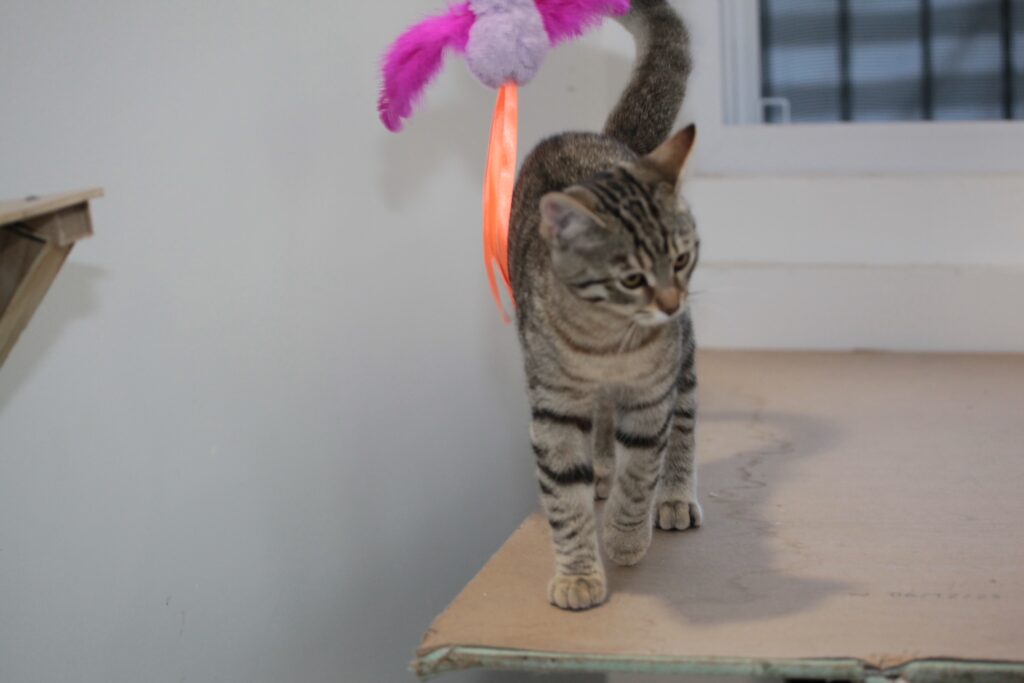
In the mid-1990s, Doris Pollatschek, a Holocaust survivor living in Jerusalem, began developing a distinctive domestic cat breed known as the Kanaani.
With its athletic build and striking appearance reminiscent of the wildcats of the Middle East, the breed was intended to preserve an unusual feline aesthetic within a domestic cat.
The World Cat Federation recognized the Kanaani in 2000.
Yet despite that recognition, the breed remained exceptionally rare, with very limited breeding populations.
Its future was far from secure.
Mikhail decided to help change that.
In Brooklyn, New York, he established the Royal House of Kanaani and The World Kanaani Organization under the umbrella of the Salita Foundation, dedicated to preserving the breed, documenting its lineage, and promoting international recognition.
His feline household includes King Arbuz, Queen Haifa, and young princesses Haya and Neshama, among others.
I must confess that the name King Arbuz makes me smile. In the language of our native Odesa, arbuz means watermelon. It is a rather unexpected name for feline royalty.
But behind the affectionate humor lies a serious conservation effort.
Mikhail has devoted considerable time to pedigree documentation, breed registration, international exhibitions, and cooperation with feline organizations.
In October 2026, London Book of World Records recognized his achievement involving seven documented purebred Kanaani cats.
His preservation work also received a Social Impact Award and Hall of Fame recognition from the London Book of World Records.
In August 2026, his cats Haifa and Haya made a successful appearance at a World Cat Federation exhibition in Finland. Following the event, both held leading positions among Kanaani cats in their respective age categories in the WCF Best Cat 2026 rankings.
For a breed known to relatively few people outside specialist circles, these developments represented meaningful progress.
But Mikhail has never been someone who regards one achievement as the end of the journey.
The Road to Athens
On November 28–29, 2026, an international World Cat Federation exhibition in Athens, Greece, will provide the next opportunity to introduce the Kanaani to a wider audience.
Mikhail plans to bring two young female cats, Haya and Neshama, both born in the United States and descended from the Israeli breed.
He hopes they will earn further recognition and progress toward junior championship titles.
Yet his ambition extends beyond competition.
He envisions the Kanaani becoming a recognizable cultural symbol of Israel, connecting the modern country with the historical imagination and animal-related traditions of the Jewish people.
The idea is not without an international precedent.
In 1972, following President Richard Nixon’s historic visit to China, the arrival of Chinese pandas in the United States became a powerful symbol of cultural diplomacy.
Could an Israeli cat breed someday play a modest but meaningful role in a similar form of cultural exchange?
Not as a political instrument, but as a living ambassador of heritage, education, and compassion for animals.
A rare breed originating in Jerusalem could participate in cultural events, educational initiatives, international exhibitions, and programs devoted to Jewish history and the human–animal bond.
There is no scientific evidence establishing that modern Kanaani cats are direct descendants of cats living in Solomon’s time. Their association with the golden cat of the ancient throne narrative is symbolic, not genealogical.
But cultural traditions are not sustained by genetics alone.
Sometimes an image preserved in an ancient story can inspire a new generation to protect something living and vulnerable.
That is what makes Mikhail’s undertaking unusual.
He is not merely breeding cats or pursuing exhibition titles. He is attempting to connect animal preservation, Jewish heritage, and international cultural recognition in a single mission.
A Journey That Continues
When I first began reflecting on Mikhail Salita’s life, I saw a man constantly searching for his place in the world.
Education, professional careers, literary projects, community initiatives, rabbinical studies — each new achievement seemed to open another road.
Today, I see a deeper continuity.
His spiritual interests, concern for historical memory, and compassion for animals have gradually converged.
As an animal chaplain and rabbi, Mikhail seeks to bring attention to the place of animals within Jewish ethical and spiritual thought.
As a custodian of the Kanaani breed, he is engaged in the practical work of protecting a rare part of Israel’s modern feline heritage.
For him, the golden cat of King Solomon is more than a beautiful image from an ancient legend.
It represents the possibility that something seemingly small — even a cat — can carry a story across centuries and cultures.
I do not know what new ideas Mikhail will pursue after Athens. Knowing him, I doubt the Greek capital will be his final destination.
For now, I wish him success, and I wish Haya and Neshama a memorable appearance on the international stage.
May their journey help secure a future for a breed whose story began in Jerusalem and is now being continued in Brooklyn.
And may the golden cat of King Solomon continue its remarkable symbolic journey — from an ancient Jewish narrative to a new generation of living cats, and from Jerusalem and New York to Athens.
Perhaps finding one’s true calling is not about reaching a final destination.
Perhaps it is about discovering something worth preserving for those who come after us.
Editorial note: the record organisation’s name has been standardised to London Book of World Records to match the published certificate.